U.S. Captures Venezuelan President Maduro in Daring Military Operation Amid Geopolitical Turmoil
1/6/20263 min read
The military operation, dubbed "Operation Absolute Resolve," involved over 150 jets launching from 20 airbases, targeting military installations and cutting power in parts of Caracas to facilitate the raid. Delta Force operatives, operating from the USS Gerald R. Ford aircraft carrier stationed in the Caribbean, executed the extraction with precision, capturing Maduro at approximately 2:01 a.m. local time. Venezuelan Vice President Delcy Rodriguez appeared on state television in a defiant speech, condemning the U.S. actions, while the country's top court appointed her to lead in Maduro's absence. Reports indicate minimal casualties, though explosions and loud noises were heard across the capital, sowing confusion and fear among residents. Trump described the mission as a success against a "heavily fortified military fortress," emphasizing its role in bringing the "outlaw dictator" to justice. Social media reactions highlighted the swiftness of the operation, likening it to the raid that captured Osama bin Laden.
The geopolitical turmoil leading to this event has roots in years of U.S.-Venezuela friction, exacerbated by Maduro's alleged involvement in drug cartels and his disputed 2018 election victory. Recent months saw the U.S. impose a total blockade on sanctioned oil tankers, seizing vessels like The Skipper and pursuing others that fled. Venezuela's alliances with Russia, China, and Iran have further strained relations, with Trump framing the capture as essential to curbing foreign influence in the Western Hemisphere. Economic collapse under Maduro's rule, marked by hyperinflation and mass emigration, has left the oil-rich nation in ruins, prompting U.S. arguments for intervention on humanitarian grounds.
Maduro's public defiance, including statements daring the U.S. to "come and get me," may have accelerated the timeline of the operation. X posts reflected mixed sentiments, with some users celebrating the end of Maduro's regime and others expressing concerns over U.S. overreach.
Internationally, reactions have been sharply divided, with allies like Colombia and Brazil expressing cautious support, while Russia and China condemned the U.S. actions as aggressive imperialism. In Venezuela, protests erupted in Caracas following the news, with some celebrating Maduro's ouster and others rallying in support of the socialist government. Al Jazeera reported widespread condemnation from global leaders, highlighting the operation's potential to destabilize the region further. X users from various countries echoed these divides, with one post stating, "Venezuela libre!" in celebration of potential freedom. The UN has called for restraint, urging dialogue to resolve the crisis peacefully. Maduro's arrival at the Metropolitan Detention Center in New York has intensified scrutiny on his upcoming court appearance
Looking ahead, the U.S. plans to oversee Venezuela's transition, potentially installing an interim government and organizing free elections. Experts warn of risks, including insurgencies from Maduro loyalists or interventions by foreign powers like Russia. The focus will be on revitalizing the economy, particularly the oil sector, which Trump sees as a strategic asset. Humanitarian aid is expected to flow in, addressing the crisis that has displaced millions. As Maduro faces charges that could lead to life imprisonment, the world watches to see if this marks the end of Venezuela's socialist era or the spark of new conflicts. X discussions speculate on the long-term impacts, with users noting the operation's resemblance to historical U.S. interventions.
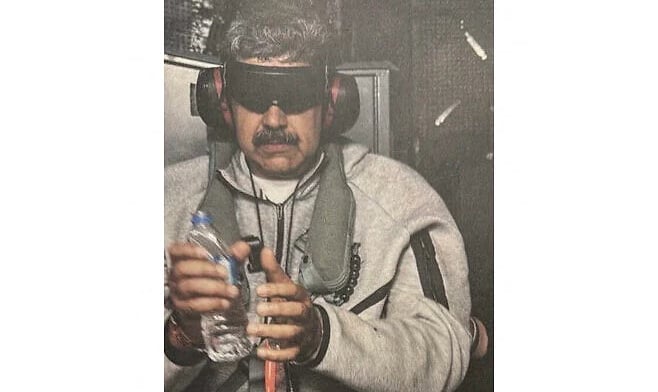
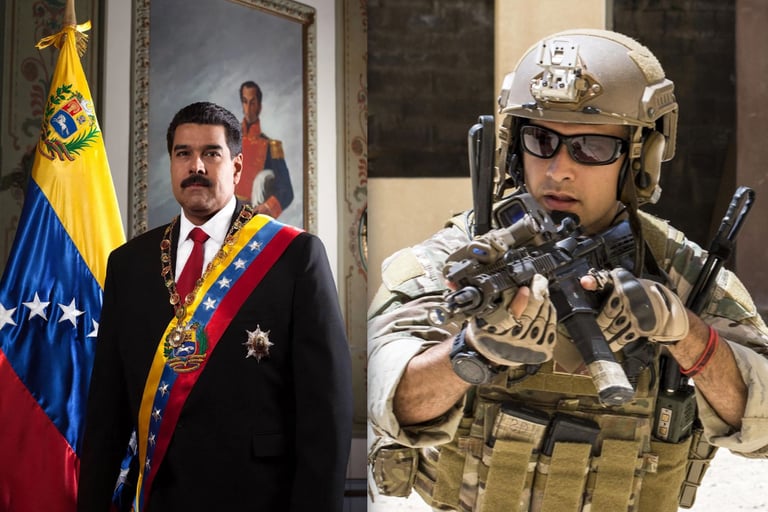
In a stunning escalation of long-standing tensions between the United States and Venezuela, President Donald Trump announced that U.S. forces have captured Venezuelan President Nicolás Maduro and his wife, Cilia Flores, during a large-scale military strike on the South American nation. The operation, which unfolded in the early hours of January 3, 2026, involved elite Delta Force units storming Maduro's compound in Caracas, aided by intelligence from a CIA source within the Venezuelan government. Maduro, who has been indicted in the U.S. on drug trafficking and weapons charges, was swiftly flown to New York to face trial, marking a dramatic turn in the geopolitical landscape. Trump declared that the U.S. would temporarily "run the country" to ensure a "safe, proper, and judicious transition," while also pledging to restore Venezuela's oil infrastructure and compensate American companies for past seizures. This bold move has sparked global reactions, with supporters hailing it as a blow against authoritarianism and critics decrying it as an act of imperialism. The capture follows months of intensified U.S. pressure, including a doubled $50 million bounty on Maduro and seizures of Venezuelan oil tankers.