Yemen Flashpoint Exposes Deepening Rift Between Saudi Arabia and the UAE
1/8/20263 min read
After years of stalemate, Yemen’s grinding civil war has once again erupted into sudden motion and this time, it is not just local factions at odds. The latest fighting in the oil-rich eastern province of Hadramout has laid bare a widening power struggle between two of the Gulf’s most influential states: Saudi Arabia and the United Arab Emirates.
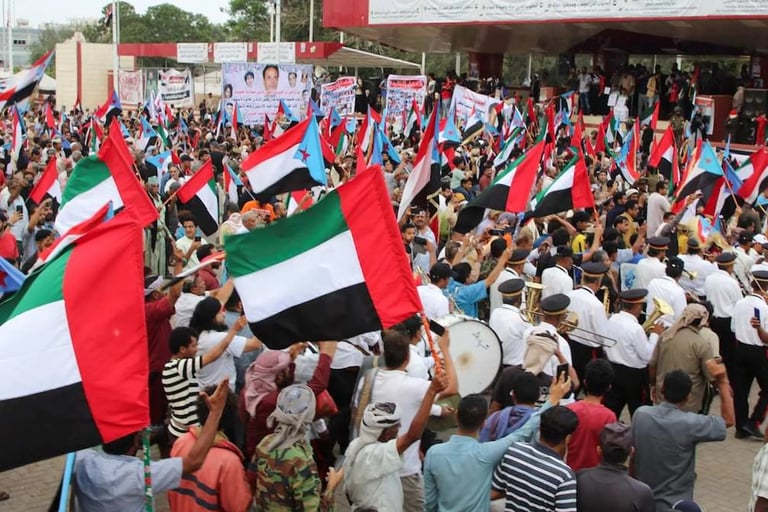
Supporters of the UAE-backed separatist Southern Transitional Council (STC) wave flags of the United Arab Emirates and of the STC, during a rally in Aden, Yemen, on December 30, 2025.
Credit : REUTERS/Fawaz Salman
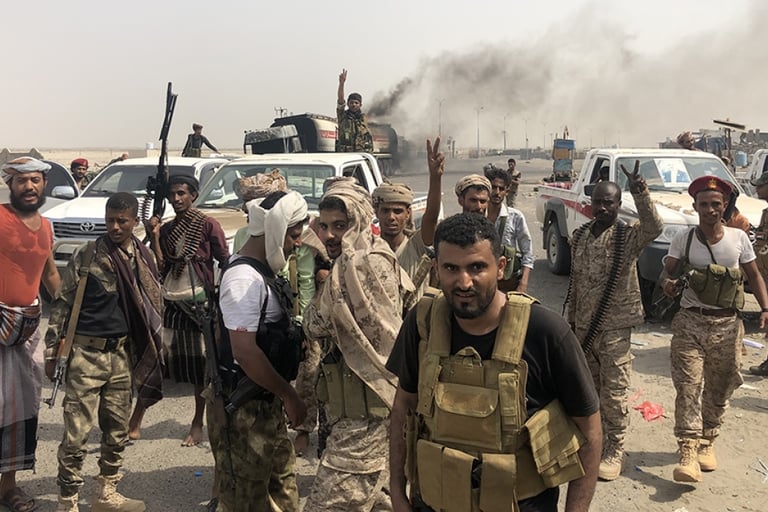
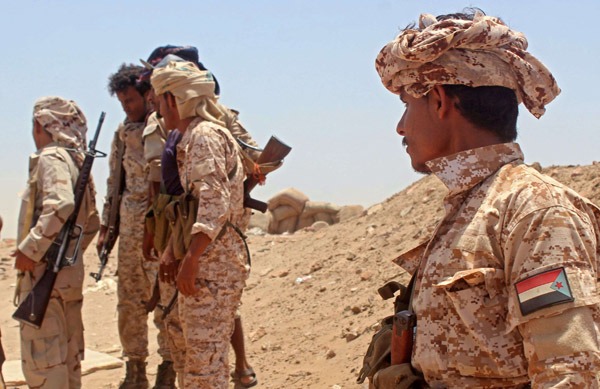
In early December, the UAE-backed Southern Transitional Council (STC) a separatist force seeking to restore an independent South Yemen that existed until 1990, launched a swift offensive across Hadramout. The group pushed out Saudi-backed government forces and expanded its reach all the way to Yemen’s border with Saudi Arabia, marking its most ambitious territorial gain in years.
The move infuriated Riyadh. Saudi Arabia responded with airstrikes and demanded that Abu Dhabi halt its backing of the STC and withdraw its presence from Yemen. While the UAE denied directing the separatists’ advance, it made a surprise announcement soon after, agreeing to pull its own troops from the country. By Sunday, Saudi-backed government forces had retaken Hadramout.
Yet the damage had already been done.
Allies Turned Rivals
“What happened in Yemen is just a demonstration of the rising tension between the Saudis and the Emiratis,” said Mohammed Al-Qadhi, a Yemeni political adviser at the Centre for Humanitarian Dialogue. “It’s competition over who is going to be the main game-changer in the region.”
Once close partners, Saudi Arabia and the UAE joined forces in 2015 after Iran-aligned Houthi rebels seized Yemen’s capital, Sanaa, threatening regional stability. But beneath that alliance, strategic differences were quietly growing.
While both Gulf states supported Yemen’s internationally recognized government, they often backed different factions within it. The UAE increasingly aligned itself with southern separatists, particularly the STC, while Saudi Arabia focused on preserving a unified Yemeni state under its influence.
Those divisions exploded into the open in 2019, when the STC seized Aden, Yemen’s interim capital, forcing the government into exile. A Saudi-brokered power-sharing deal, "the Riyadh Agreement" sought to reunite anti-Houthi forces but ultimately collapsed amid mutual distrust and unfulfilled commitments.
A Diplomatic Spark Ignites the Fire
Tensions worsened further last year following a diplomatic misunderstanding. After Saudi Crown Prince Mohammed bin Salman visited Washington, Emirati officials reportedly believed, despite Saudi denials, that Riyadh had urged the US to sanction Sudan’s Rapid Support Forces and their alleged backers in the UAE.
According to regional analysts, that perception became the trigger for the latest chain of retaliation, including the STC’s offensive against Saudi-backed forces in Yemen.
With separatist fighters suddenly positioned along its southern border, Riyadh moved decisively to roll back their gains.
Where Does This Leave Yemen?
The tug-of-war has further fractured the already fragile anti-Houthi coalition. In a sign of escalating stakes, STC leader Aidarous al-Zubaidi recently skipped crisis talks in Riyadh after being stripped of his position on Yemen’s Saudi-backed presidential council and referred for prosecution on treason charges.
Meanwhile, relations at the very top have reportedly soured. Crown Prince Mohammed bin Salman and UAE President Mohammed bin Zayed, once seen as inseparable partners, are said to no longer be on speaking terms. Speculation has swirled over possible escalation, from airspace restrictions to an Emirati exit from OPEC, though most analysts believe such drastic steps remain unlikely.
For now, the UAE’s troop withdrawal has eased immediate tensions. But the underlying rivalry remains unresolved.
In Yemen, where years of war have already devastated millions of lives, the latest power struggle serves as a grim reminder: the conflict is no longer just a civil war. It is a frontline in a broader contest for influence shaping the future of the Middle East.